The real bottleneck is not the alphabet (you already know it) or the shared vocabulary. Words like Haus, Buch, Hand, Wasser, and Garten feel familiar because English and German both belong to the West Germanic family. The slower parts are the three genders (der, die, das), the four cases, and verb placement. Learners who treat these as patterns to absorb through exposure rather than endless rule charts usually progress faster.
Why most approaches feel slow

Traditional classroom or app-only paths often deliver too little input at the right level and delay speaking. Research on language acquisition, particularly Stephen Krashen’s work on comprehensible input, shows that people acquire language most efficiently when they understand messages slightly above their current level (often called i+1). Pure grammar drills or isolated vocabulary lists produce slower results than combining targeted study with large amounts of understandable German.
Spaced repetition systems reverse the forgetting curve first documented by Hermann Ebbinghaus. Reviewing words and phrases at increasing intervals keeps them in long-term memory far better than cramming. High-frequency vocabulary also delivers outsized returns: the most common 500–1,000 words cover a large share of everyday speech.
The practical fastest path for English speakers
The learners who reach conversational ability (roughly CEFR B1) in the shortest calendar time usually combine four elements:
- High-frequency vocabulary with articles from day one. For example learn das Haus, not just Haus. Focus first on the most common words and survival phrases. This builds a usable base quickly.
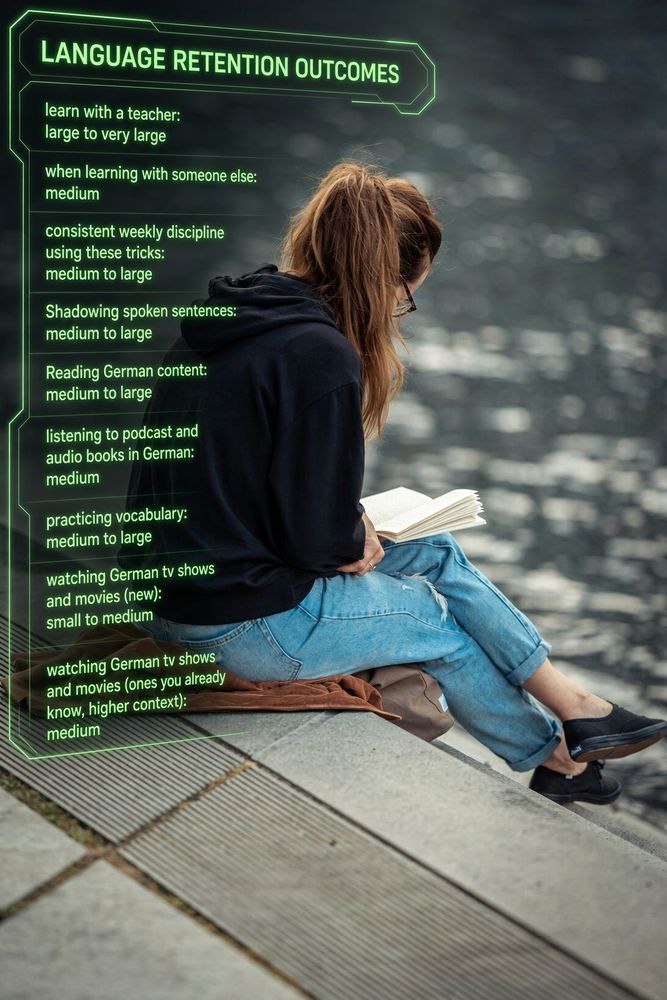
- Daily comprehensible input. Listen to and read German you mostly understand such as graded materials, slow news from Deutsche Welle, short podcasts, or videos with dual subtitles. Even 20–30 minutes daily compounds faster than weekend marathons. The Goethe-Institut offers free structured exercises and audio at every level.
- Spaced repetition for the pieces that need memorizing. Genders, core case patterns, and irregular verbs benefit from systematic review. Tools that schedule reviews just before you forget them are significantly more efficient than re-reading notes.
- Speaking early and often. Output practice, even imperfect, accelerates progress. Shadow audio, record yourself, and hold short conversations. Studies and learner reports consistently show that people who begin speaking within the first weeks outperform those who wait until they “feel ready.”
The Common European Framework of Reference for Languages (CEFR) provides clear milestones. Goethe-Institut guidance typically estimates 60–150 hours for A1, rising to roughly 260–490 hours total for B1 and 450–600 for B2 (guided learning hours). At one focused hour per day, many adults reach solid conversational ability in 12–18 months; intensive schedules compress this further. Full professional proficiency remains closer to the FSI’s multi-hundred-hour range.
What this looks like in practice

A typical efficient beginner week might include 15–20 minutes of spaced-repetition review, 20–30 minutes of structured lessons or grammar explanation, and 20–40 minutes of listening or reading at a mostly understandable level. Once basic survival language is in place, add one short conversation session per week. Learners who follow this pattern report that cases and genders start to “sound right” after repeated exposure in context rather than remaining abstract rules. One common pattern is reaching reliable A2 in a few months of consistent daily work, then B1 within a year when speaking practice is added.
Progress still depends on individual factors—prior language experience, time available, and how much you actually enjoy the materials. Consistency beats intensity. Fifteen to thirty focused minutes every day outperforms irregular long sessions.
Getting started
German rewards the same habits that work for other languages: prioritize high-frequency material, use spaced review, consume plenty of input you understand, and speak before you feel fully ready. The grammar is real, but the shared vocabulary and phonetic spelling give English speakers a useful head start compared with more distant languages.
Want structured guidance?
Get clear explanations with real speaking practice. Book a lesson with us and start learning German tailored to your level and goals.
References
- U.S. Department of State, Foreign Service Institute. Foreign Language Training timelines and difficulty categories. Available at: https://www.state.gov/foreign-language-training/
- Council of Europe. Common European Framework of Reference for Languages (CEFR): Learning, teaching, assessment. Available at: https://www.coe.int/en/web/common-european-framework-reference-languages
- Goethe-Institut. Free practice materials and level guidance for learning German. Available at: https://www.goethe.de/en/spr/ueb.html
- Krashen, Stephen. The Case for Comprehensible Input. Available at: https://www.sdkrashen.com/content/articles/case_for_comprehensible_input.pdf
- Deutsche Welle. Learn German resources (audio, video, and courses). Available at: https://www.dw.com/en/learn-german/s-2469